 Weather
 Locations
 Careers
 Login
Login

From dairy barns to family destinations
At 9 years old, most children are content with running lemonade stands. Bob Ricci had grander visions. Armed with a lawn mower, a wagon and four rows of sweet corn his dad planted, young Bobby set up shop on the roadside near his family’s dairy farm in Snohomish, Washington, about 30 miles north of Seattle. Selling corn at 13 ears for a dollar, Bob discovered something that would shape his life forever: the power of bringing joy to others through agriculture.
Today, that roadside stand has blossomed into Bob’s Corn and Pumpkin Farm, a 207-acre agritourism destination that welcomes over 100,000 visitors each fall. During the rest of the year, Bob says he’s perfectly content to be a farmer growing hay, corn and pumpkins. Bob’s story is about business growth and transition, but it’s also a testament to how one farmer’s commitment to caring has transformed his community, his employees and the land he loves.
A heritage rooted in resilience
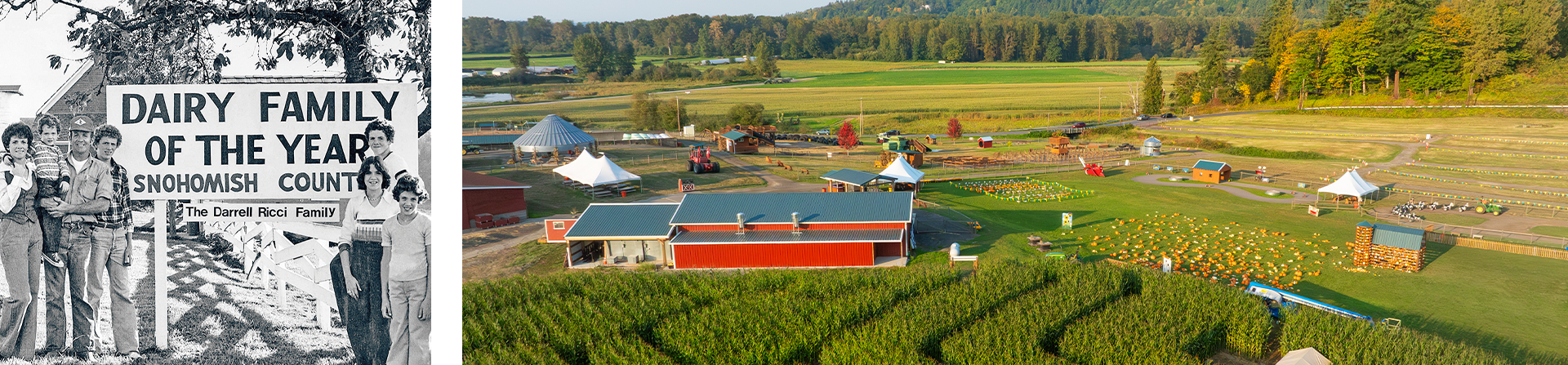
The Ricci family story began in 1888 when Bob’s great-grandfather immigrated from northern Italy to homestead in the Snohomish Valley. The family started with a small apple orchard that quickly evolved into a dairy operation.
“I wasn’t into the cows like my siblings were,” Bob says, remembering how his father planted those first corn rows to give him an entrepreneurial project all his own. “My dad thought I needed to do something different, so he told me I could sell the corn at a small stand by the side of the road.”
That farm stand became Bob’s passion project throughout high school and college. Even while studying at Washington State University, he drove home (more than 300 miles one way) every weekend during harvest season to run his corn stand. After graduation, he expanded into wholesaling corn to Safeway stores. The biggest transition occurred in 2001, when the family made the tough decision to sell their dairy cows.
Adapting to change with vision
As urban development swept into Snohomish County, many dairy farmers faced an impossible choice: sell to developers or find new ways to sustain their livestock operations. Bob and a handful of local farmers chose a third path – one that would change how the urban community experiences agriculture.
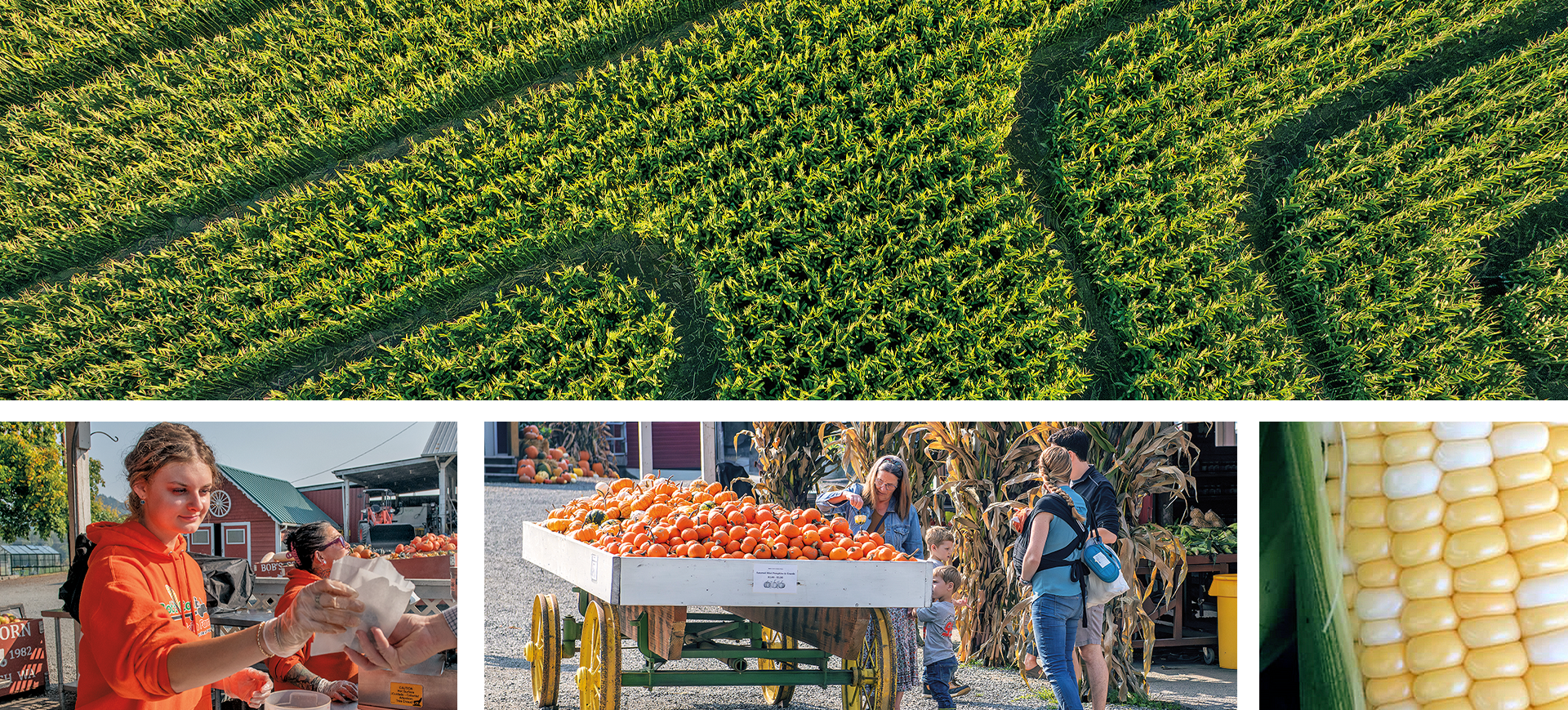
“Instead of raising corn for people in Seattle, I thought, what can we do to bring people to the farm and give them an experience?” Bob explains. The answer came in the form of his first 5-acre corn maze in 2001, built after he learned about the craft at a Wisconsin conference. He still constructs his corn mazes in the old-school way (no GPS), using grid paper, a pencil and a riding lawn mower.
Today Bob’s Corn and Pumpkin Farm features two corn mazes, 45 acres of pumpkins in over 70 varieties, sunflowers for festivals, corn maze fire pits, a country store and numerous family-friendly activities. During peak season, the farm employs more than 280 people and serves up to 10,000 visitors daily.
Caring for community through connection
For Bob, every visitor represents an opportunity to bridge the gap between urban and rural communities. “We are the liaison between agriculture and the general public,” he explains. “We’re right there at the forefront to answer questions about what we grow and how we grow it. We are their farmer.”
That’s why visitors are treated to a unique farm experience. Bob learned about “second mile customer service” from the Cathy family, who own Chick-fil-A, during a visit to their Rock Ranch in Georgia. The concept transforms ordinary service interactions into extraordinary moments of care.
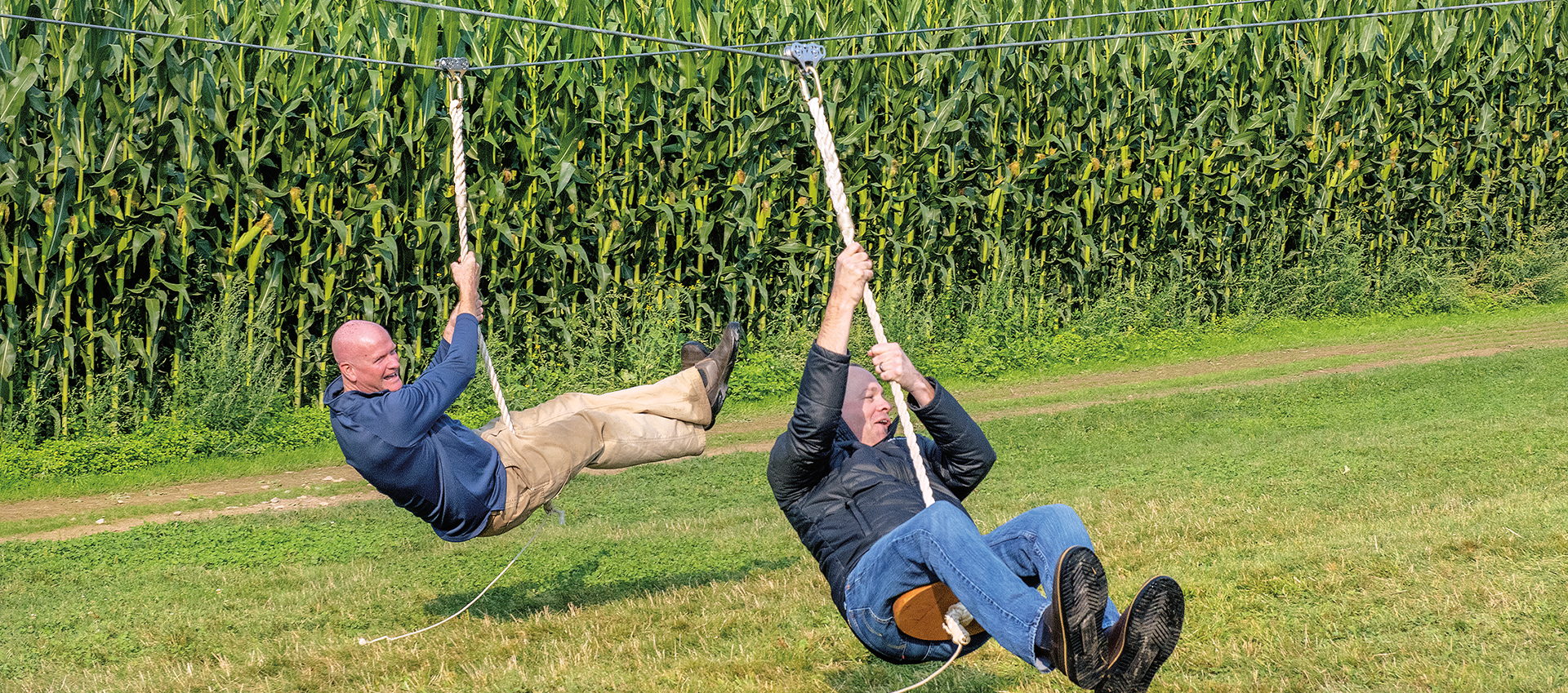
“A lot of businesses will go the extra mile for you, but will they go the second extra mile?” Bob explains. At Bob’s Corn, this means loading pumpkins for tired families, offering tour guides on hayrides, and graveling parking lots and pathways, all to create an atmosphere where community comes together.
Nurturing employees like family
Perhaps nowhere is Bob’s caring approach more evident than in the relationship with his employees. In a challenging labor market, Bob’s Corn received more applications this year than available positions, with a huge number of employees returning from the previous season – an extraordinary retention rate for seasonal work.
The farm has become a launching pad for young people’s careers, and a reunion point for students (and their parents) who return each season. “Even when they get off work and clock out, they stick around and hang out because they love being part of something bigger than they are,” Bob says. “We make people feel like this is their farm. We want the farm to be people’s third place – that essential community space between home and work where people feel they truly belong.”
Preserving land for future generations
Bob’s deepest act of caring may be his commitment to preserving the farm itself. Through a partnership with Washington Farmland Trust, Bob and his wife, Sarah, have placed a conservation easement on all 207 acres, ensuring the land will remain in agricultural use forever. The $1.4 million easement – funded through a combination of public grants, donations from private individuals and corporations, and an investment from the state’s Housing Finance Commission through the Farmland Protection and Affordability Investment Program – extinguished development rights, allowing the Riccis to maintain ownership and continue farming. More importantly, it removes future concern for the Riccis' five daughters or future grandchildren.
“By working with Washington Farmland Trust, we were able to sell our development rights so the land can’t be developed,” Bob says. “It’s a forever farm, and if it ever passes outside the family, it will pass to another farmer. Our girls will never be put in a situation where they have to choose between preserving the farm and accepting a developer’s offer.”
Choosing a lender who shares your values
For the past 10 years, Bob has served as a member of AgWest’s Local Advisory Committee, offering unique insights into the needs of small farm operations and agritourism. He has also volunteered as an AgWest scholarship judge for the past eight years, witnessing firsthand the impact on young people across the agricultural West.
“Giving back is important to me,” Bob says. “The stewardship investments we make as a cooperative for our local communities, and for the scholarship program in particular, are the things I’m most proud of being a member of AgWest.”
Looking forward with hope
From a 9-year-old boy with a corn stand to an enthusiastic leader in agricultural tourism, Bob Ricci’s journey illustrates a profound truth: When we care deeply for our communities, our employees and our land, we create something that extends beyond profit. We create a legacy that nourishes families today and for generations to come.
Return to Customer Stories home page.