Weather
 Locations
 Careers
 Login
Login


Almond and pistachio updates
Pistachio producers face a very small 2026 crop.
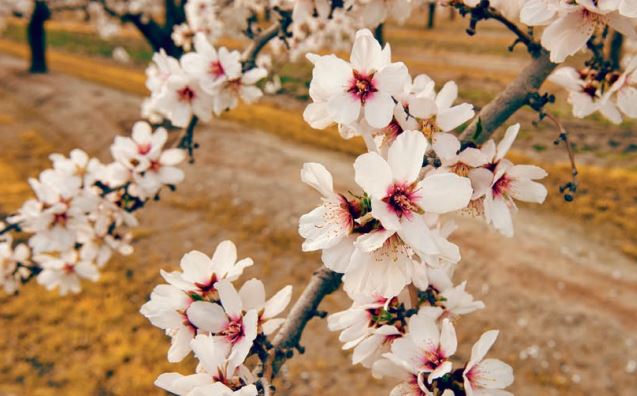
Almond prices increased in August on favorable supply and demand dynamics. Inventory carry-over from the 2025 crop is down 3.75% year over year at 483 million pounds as of July. Harvest on the 2026 crop started early, as warm spring and summer weather accelerated crop development. Yields seem to vary across orchards based on management practices. While it remains early in the season, there are indications the 2026 crop may come in below initial estimates. Reports suggest smaller sizes for the nonpareil variety, resulting in some concern that larger kernels will be in limited supply this season. Some processors and handlers are revising contracts, delaying shipments and/or substituting for smaller sizes. Pest and disease pressures remained elevated throughout the month, particularly with navel orangeworm, web-spinning mites and red blotch disease. Both domestic and export demand are strong, with commitments for the 2026 crop (crop sold but not delivered) up 14% year over year as of July.
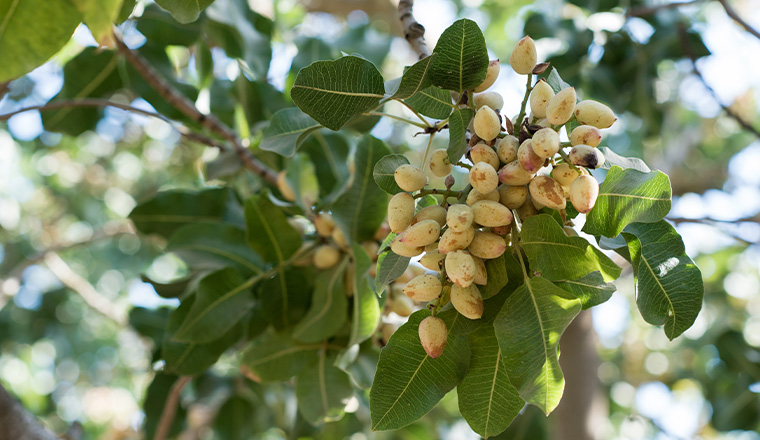
Pistachio prices rose in August on strong global demand and reports indicating the 2026 crop could be at least 50% smaller than the 2025 crop. Market participants are holding off on making long-term commitments until they have a clearer picture of the crop size. Some growers are reportedly bypassing processors altogether and selling directly into the market, representing a new dynamic in the industry. While crop quality seems generally favorable, nut sizes appear smaller than average with greater closed-shell percentages. (Most shells naturally open during development, which allows for easier processing and access to premium markets.) This is further increasing uncertainty as to the final crop size calculation.
Profitability
September 16, 2026Almonds: Slightly profitable - Neutral 12-month outlook
Pistachios: Breakeven profitability - Neutral 12-month outlook
Strong demand, low inventory carry-over and an estimated smaller 2026 crop has improved the supply and demand outlook.
Estimates for the 2026 pistachio crop suggest significant year-over-year production declines due to spring heat, low pollination and alternate bearing. With rising prices, profitability will largely be determined by whether a producer has sufficient yields and/or crop insurance.
Exports are important to both almond and pistachio industries, making up 70% - 80% of domestic production. India has a long history of nut consumption and is the largest foreign market for almonds, taking almost exclusively in-shell nuts. China is the biggest market for pistachios, the result of a decade-long trend of younger generations shifting towards healthier diets. Europe has a long history of nut consumption and represents the second largest market for both U.S. almonds and pistachios. The Middle East is increasingly important due to rising demand in the United Arab Emirates and Turkey. The U.S. dominates global almond production, making it perhaps less sensitive to retaliatory tariffs than other specialty crops. The U.S. imports a very limited amount of almonds and pistachios.
Almond production, exports, carry-over and imports
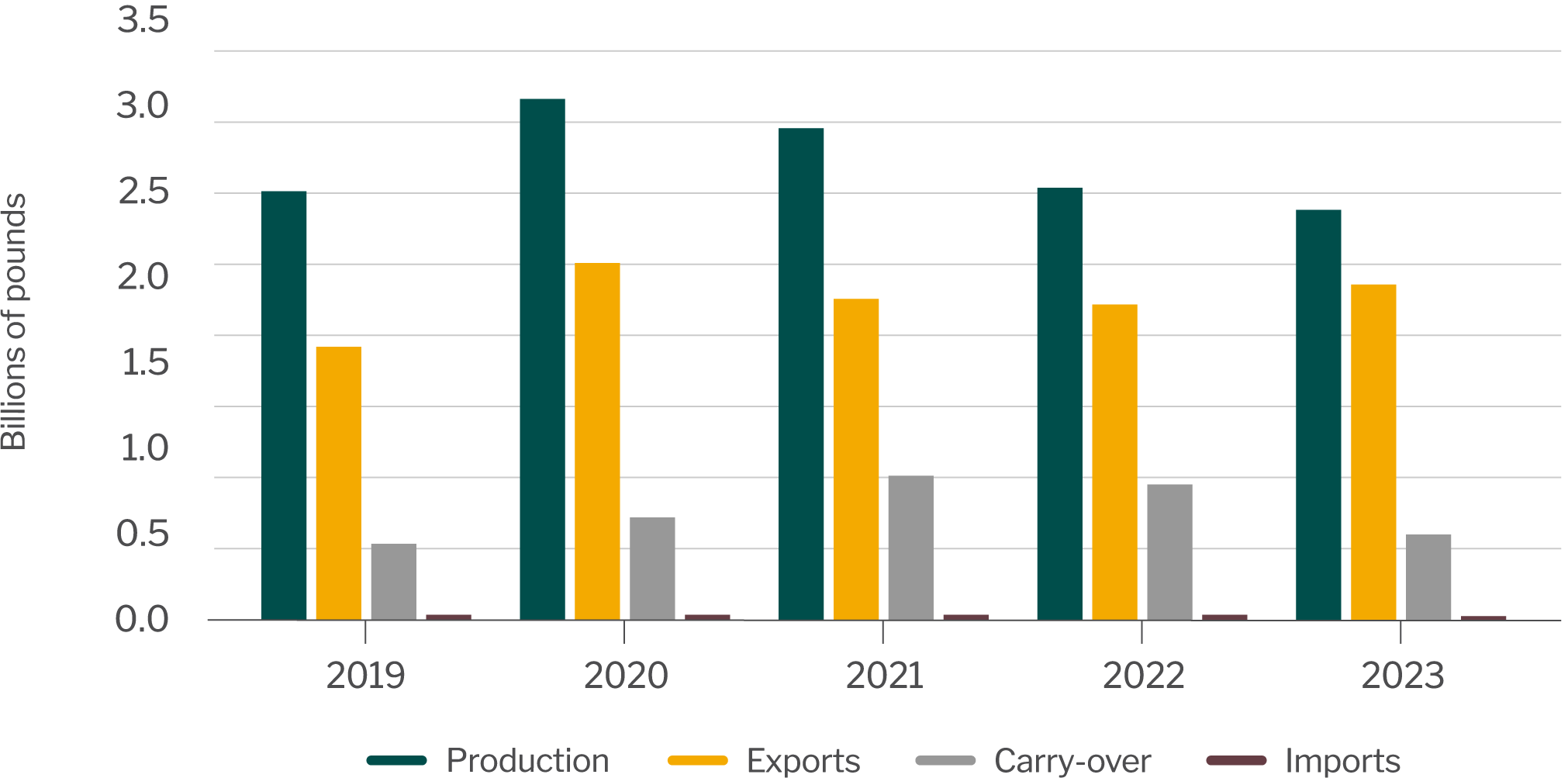
Almond Board July Position Reports. U.S. Census Bureau. Crop year is from August to July.
Pistachio production, exports, carry-over and imports
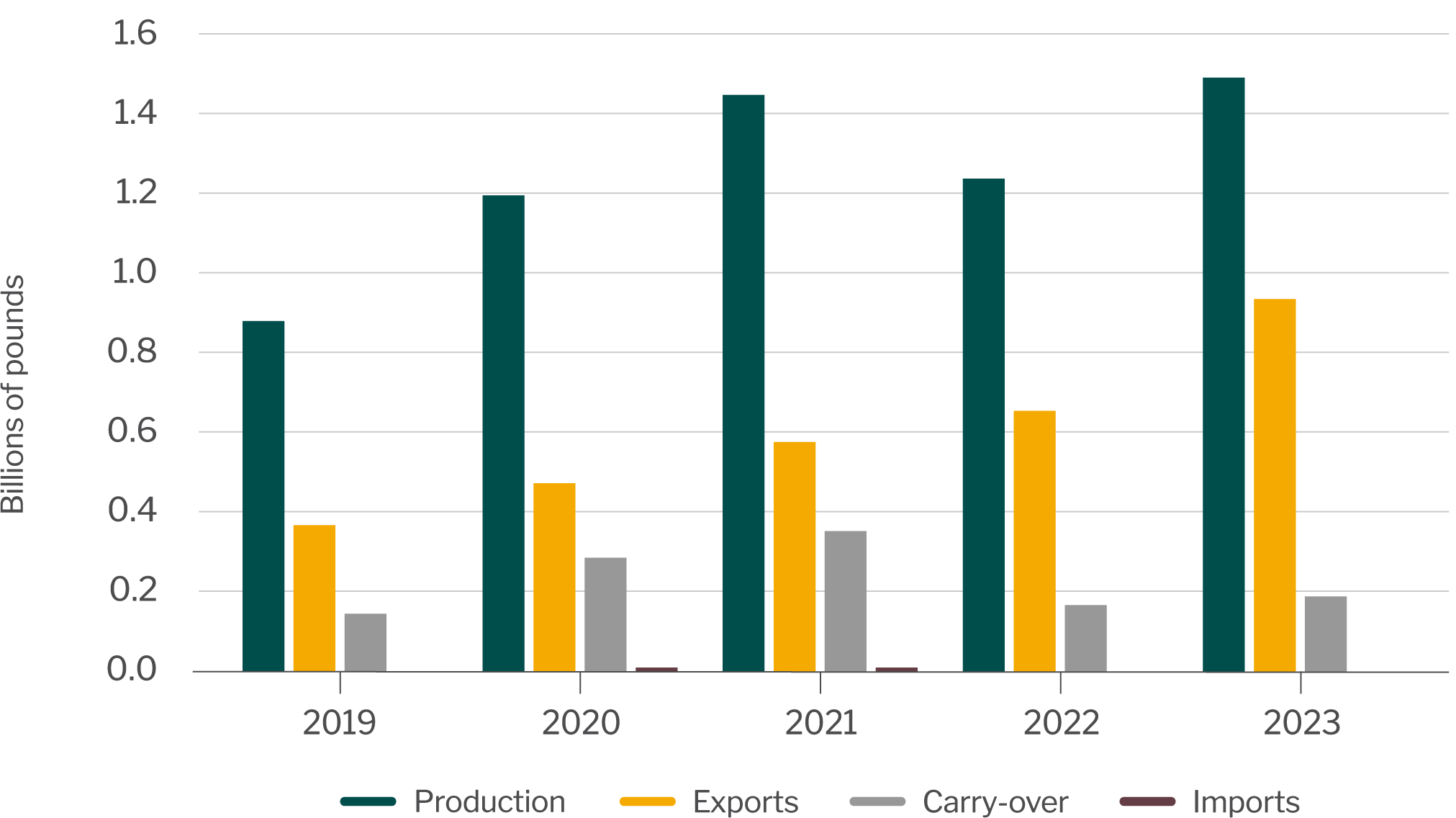
Administrative Committee for Pistachios Shipment Reports. U.S. Census Bureau. Crop year is from September to August.
Tariff tracker - Tariff rates applied to U.S. trade partners are consistenly updated to reflect policy changes. The World Trade Organization (WTO) tracks duties and tariffs on almonds and pistachios. For your convenience, the following links will take you to data for top export markets, including India, China and European Union (shelled almonds and inshell pistachios). WTO also tracks rates for almond imports to the U.S. Please consult with a trade lawyer or professional for detailed and up-to-date insights on tariff rates and their application to almonds and pistachios.
For guidance on interpreting duty and tariff rates, please refer to our Tariff Guide.
Almond and pistachio updates
Pistachio producers face a very small 2026 crop.
Almond prices increased in August on favorable supply and demand dynamics. Inventory carry-over from the 2025 crop is down 3.75% year over year at 483 million pounds as of July. Harvest on the 2026 crop started early, as warm spring and summer weather accelerated crop development. Yields seem to vary across orchards based on management practices. While it remains early in the season, there are indications the 2026 crop may come in below initial estimates. Reports suggest smaller sizes for the nonpareil variety, resulting in some concern that larger kernels will be in limited supply this season. Some processors and handlers are revising contracts, delaying shipments and/or substituting for smaller sizes. Pest and disease pressures remained elevated throughout the month, particularly with navel orangeworm, web-spinning mites and red blotch disease. Both domestic and export demand are strong, with commitments for the 2026 crop (crop sold but not delivered) up 14% year over year as of July.
Pistachio prices rose in August on strong global demand and reports indicating the 2026 crop could be at least 50% smaller than the 2025 crop. Market participants are holding off on making long-term commitments until they have a clearer picture of the crop size. Some growers are reportedly bypassing processors altogether and selling directly into the market, representing a new dynamic in the industry. While crop quality seems generally favorable, nut sizes appear smaller than average with greater closed-shell percentages. (Most shells naturally open during development, which allows for easier processing and access to premium markets.) This is further increasing uncertainty as to the final crop size calculation.

Profitability
September 16, 2026Almonds: Slightly profitable - Neutral 12-month outlook
Pistachios: Breakeven profitability - Neutral 12-month outlook
Strong demand, low inventory carry-over and an estimated smaller 2026 crop has improved the supply and demand outlook.
Estimates for the 2026 pistachio crop suggest significant year-over-year production declines due to spring heat, low pollination and alternate bearing. With rising prices, profitability will largely be determined by whether a producer has sufficient yields and/or crop insurance.
Exports are important to both almond and pistachio industries, making up 70% - 80% of domestic production. India has a long history of nut consumption and is the largest foreign market for almonds, taking almost exclusively in-shell nuts. China is the biggest market for pistachios, the result of a decade-long trend of younger generations shifting towards healthier diets. Europe has a long history of nut consumption and represents the second largest market for both U.S. almonds and pistachios. The Middle East is increasingly important due to rising demand in the United Arab Emirates and Turkey. The U.S. dominates global almond production, making it perhaps less sensitive to retaliatory tariffs than other specialty crops. The U.S. imports a very limited amount of almonds and pistachios.
Almond production, exports, carry-over and imports
Almond Board July Position Reports. U.S. Census Bureau. Crop year is from August to July.
Pistachio production, exports, carry-over and imports
Administrative Committee for Pistachios Shipment Reports. U.S. Census Bureau. Crop year is from September to August.
Tariff tracker - Tariff rates applied to U.S. trade partners are consistenly updated to reflect policy changes. The World Trade Organization (WTO) tracks duties and tariffs on almonds and pistachios. For your convenience, the following links will take you to data for top export markets, including India, China and European Union (shelled almonds and inshell pistachios). WTO also tracks rates for almond imports to the U.S. Please consult with a trade lawyer or professional for detailed and up-to-date insights on tariff rates and their application to almonds and pistachios.
For guidance on interpreting duty and tariff rates, please refer to our Tariff Guide.