Weather
 Locations
 Careers
 Login
Login


Hay updates
Winter feed concerns boost hay prices.
Hay markets continued to strengthen across much of the Western U.S. during August as dry conditions reduced pasture availability and increased supplemental feeding needs. Feed demand remains elevated as producers in dry regions look to secure winter inventories earlier than normal.
Conditions by state:
Arizona
Arizona feed markets remain firm as livestock producers compete for limited forage supplies. Hay prices have strengthened considerably with dairy-quality hay remaining in particularly strong demand and short supply. Even rain-damaged hay reportedly is $45 per ton more than a year ago. Strong demand from drought-affected areas of Texas continues to support hay movement and pricing.
California
California forage conditions continue to be shaped by extreme weather. In Imperial Valley, severe heat reportedly reduced alfalfa yields by approximately 60%, contributing to expectations for higher alfalfa hay and alfalfa seed prices moving forward.
Idaho
Idaho hay demand remains moderate as recent rainfall has improved pasture conditions, allowing cattle to stay on range longer and reducing forage needs in some areas. However, widespread rain events have impacted portions of the alfalfa third cutting, resulting in a larger volume of rain-damaged hay entering the market. Straw supplies are also abundant, with significant volumes being baled and added to inventories. 2025 straw inventories remain on hand and continue to weigh on the market. Overall, adequate forage supplies and improved growing conditions have moderated demand, although weather-related quality concerns remain a factor for producers heading into the fall.
Montana
Montana hay markets have strengthened sharply after several years of low prices, driven by drought, heat stress, and growing winter feed demand. In southwestern Montana, poor pasture conditions and wildfires that displaced more than 1,000 cows have boosted forage demand, while eastern Montana producers report hay buyer inquiries from more than 400 miles away. Despite additional supplies from failed grain acres harvested as hay, strong demand has supported prices at $200 to $250 per ton FOB, although Canadian imports continue to limit further gains.
Oregon
Oregon producers reported some of the strongest hay market conditions in the West. In Central Point, stock hay prices are up $70 per ton from a year ago as drought, wildfires, and reduced rangeland have increased demand for winter feed. Klamath Falls producers also reported stronger demand from dairies, exporters, and cow-calf operators, with hay prices $40 to $60 per ton higher than last year amid growing concerns over forage supplies.
Washington
Washington hay markets are improving, with stronger alfalfa demand and modest price gains. Dry growing conditions have supported hay quality and accelerated crop development, likely leading to earlier silage harvests. While timothy hay demand remains weak due to cautious export buying, Western Washington growers reported strong yields and harvest conditions. Uncertainty surrounding export company restructuring and ownership changes continues to cloud the long-term outlook for hay exports.
Profitability
September 16, 2026Hay (alfalfa): Slightly profitable - Bullish 12-month outlook
Hay (timothy): Slightly profitable - Bullish 12-month outlook
Alfalfa profitability has improved as drought, reduced pasture availability, and stronger feed demand have lifted prices, and is expected to continue improving over the next 12 months.
Timothy hay remains slightly profitable, although current export demand is weak. The outlook is cautiously bullish based on expectations for improving forage markets and eventual stabilization in export demand. However, uncertainty surrounding export buyers remains a significant risk.
Exports make up 31% of the West Coast’s total hay production and about 3.1% of U.S. hay production. Higher quality hay is typically allocated for export markets, as these markets demand superior products and are willing to pay a premium for them. Key export destinations for West Coast hay producers include Japan, China, South Korea and Saudi Arabia. Long-standing markets like Japan and South Korea have remained stable over the years, providing consistent demand. Meanwhile, newer markets such as Saudi Arabia and the United Arab Emirates have shown significant growth, though they continue to be volatile.
China became the largest export market for West Coast hay in 2021, holding that spot through 2023. However, by 2024, China’s slowing economy and government initiatives to reduce dairy herds resulted in a sharp decline in hay imports, with reduced purchases expected to persist in the near term.
Hay imports for West Coast livestock producers are minimal, with most of them sourced from Canada.
Hay production, exports and imports
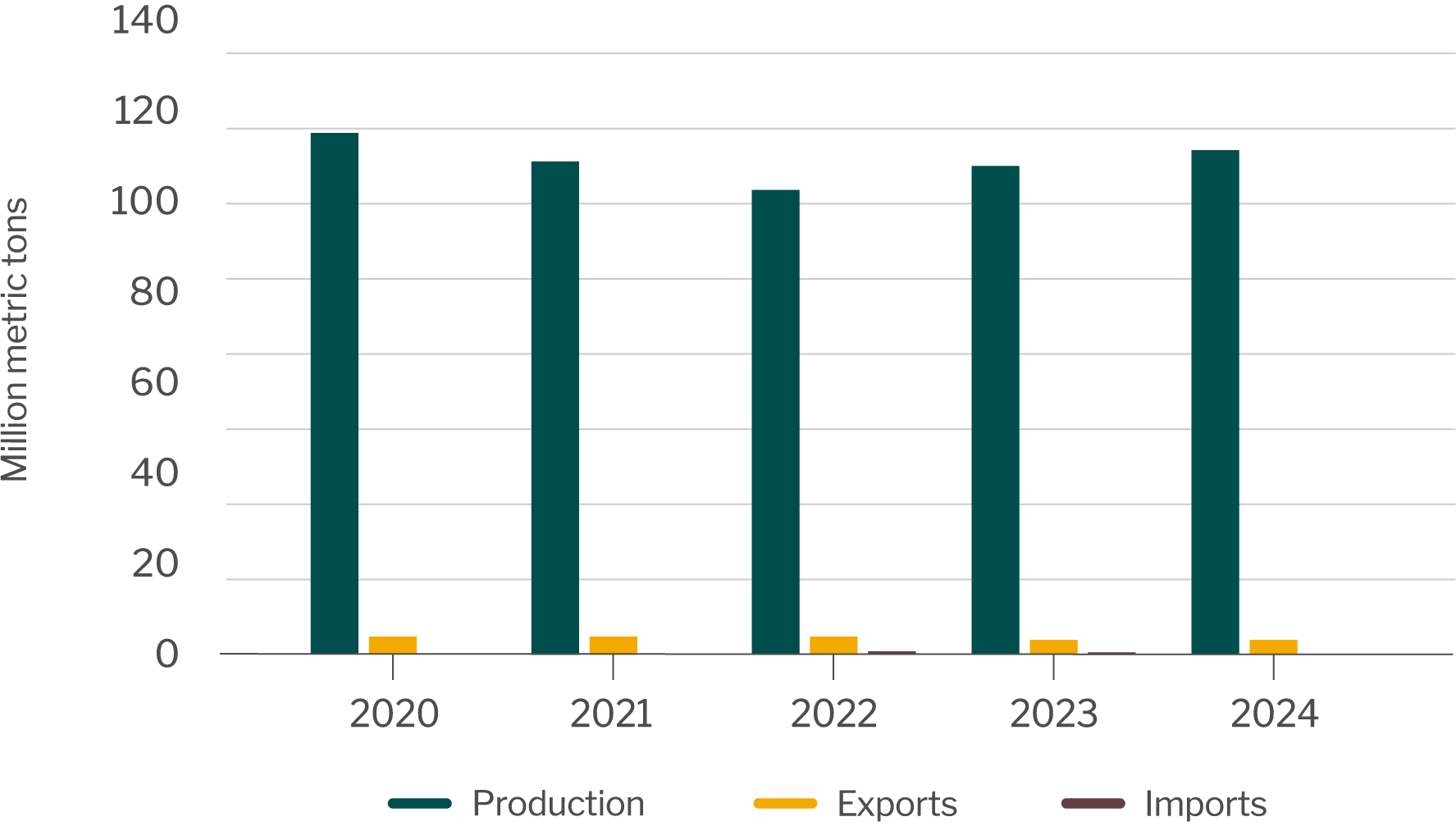
USDA National Agriculture Statistics Service. U.S. Census Bureau.
Tariff tracker - Tariff rates applied to U.S. trade partners are consistenly updated to reflect policy changes. The World Trade Organization (WTO) tracks duties and tariffs on hay and forages. For your convenience, the following links will take you to tariff data on alfalfa hay (a leading U.S. export for the hay industry) for top markets including Japan, South Korea and China. WTO also tracks rates for hay imports to the U.S. Please consult with a trade lawyer or professional for detailed and up-to-date insights on tariff rates and their application to hay.
For guidance on interpreting duty and tariff rates, please refer to our Tariff Guide.
Hay updates
Winter feed concerns boost hay prices.
Hay markets continued to strengthen across much of the Western U.S. during August as dry conditions reduced pasture availability and increased supplemental feeding needs. Feed demand remains elevated as producers in dry regions look to secure winter inventories earlier than normal.
Conditions by state:
Arizona
Arizona feed markets remain firm as livestock producers compete for limited forage supplies. Hay prices have strengthened considerably with dairy-quality hay remaining in particularly strong demand and short supply. Even rain-damaged hay reportedly is $45 per ton more than a year ago. Strong demand from drought-affected areas of Texas continues to support hay movement and pricing.
California
California forage conditions continue to be shaped by extreme weather. In Imperial Valley, severe heat reportedly reduced alfalfa yields by approximately 60%, contributing to expectations for higher alfalfa hay and alfalfa seed prices moving forward.
Idaho
Idaho hay demand remains moderate as recent rainfall has improved pasture conditions, allowing cattle to stay on range longer and reducing forage needs in some areas. However, widespread rain events have impacted portions of the alfalfa third cutting, resulting in a larger volume of rain-damaged hay entering the market. Straw supplies are also abundant, with significant volumes being baled and added to inventories. 2025 straw inventories remain on hand and continue to weigh on the market. Overall, adequate forage supplies and improved growing conditions have moderated demand, although weather-related quality concerns remain a factor for producers heading into the fall.
Montana
Montana hay markets have strengthened sharply after several years of low prices, driven by drought, heat stress, and growing winter feed demand. In southwestern Montana, poor pasture conditions and wildfires that displaced more than 1,000 cows have boosted forage demand, while eastern Montana producers report hay buyer inquiries from more than 400 miles away. Despite additional supplies from failed grain acres harvested as hay, strong demand has supported prices at $200 to $250 per ton FOB, although Canadian imports continue to limit further gains.
Oregon
Oregon producers reported some of the strongest hay market conditions in the West. In Central Point, stock hay prices are up $70 per ton from a year ago as drought, wildfires, and reduced rangeland have increased demand for winter feed. Klamath Falls producers also reported stronger demand from dairies, exporters, and cow-calf operators, with hay prices $40 to $60 per ton higher than last year amid growing concerns over forage supplies.
Washington
Washington hay markets are improving, with stronger alfalfa demand and modest price gains. Dry growing conditions have supported hay quality and accelerated crop development, likely leading to earlier silage harvests. While timothy hay demand remains weak due to cautious export buying, Western Washington growers reported strong yields and harvest conditions. Uncertainty surrounding export company restructuring and ownership changes continues to cloud the long-term outlook for hay exports.

Profitability
September 16, 2026Hay (alfalfa): Slightly profitable - Bullish 12-month outlook
Hay (timothy): Slightly profitable - Bullish 12-month outlook
Alfalfa profitability has improved as drought, reduced pasture availability, and stronger feed demand have lifted prices, and is expected to continue improving over the next 12 months.
Timothy hay remains slightly profitable, although current export demand is weak. The outlook is cautiously bullish based on expectations for improving forage markets and eventual stabilization in export demand. However, uncertainty surrounding export buyers remains a significant risk.
Exports make up 31% of the West Coast’s total hay production and about 3.1% of U.S. hay production. Higher quality hay is typically allocated for export markets, as these markets demand superior products and are willing to pay a premium for them. Key export destinations for West Coast hay producers include Japan, China, South Korea and Saudi Arabia. Long-standing markets like Japan and South Korea have remained stable over the years, providing consistent demand. Meanwhile, newer markets such as Saudi Arabia and the United Arab Emirates have shown significant growth, though they continue to be volatile.
China became the largest export market for West Coast hay in 2021, holding that spot through 2023. However, by 2024, China’s slowing economy and government initiatives to reduce dairy herds resulted in a sharp decline in hay imports, with reduced purchases expected to persist in the near term.
Hay imports for West Coast livestock producers are minimal, with most of them sourced from Canada.
Hay production, exports and imports
USDA National Agriculture Statistics Service. U.S. Census Bureau.
Tariff tracker - Tariff rates applied to U.S. trade partners are consistenly updated to reflect policy changes. The World Trade Organization (WTO) tracks duties and tariffs on hay and forages. For your convenience, the following links will take you to tariff data on alfalfa hay (a leading U.S. export for the hay industry) for top markets including Japan, South Korea and China. WTO also tracks rates for hay imports to the U.S. Please consult with a trade lawyer or professional for detailed and up-to-date insights on tariff rates and their application to hay.
For guidance on interpreting duty and tariff rates, please refer to our Tariff Guide.